


William Lilly used the Regiomontanus house system, and is cited as the authority for its continued use. In this article, David Busamante examines the history of Lilly's choices, and explores the mathematics behind diurnal arcs and house division.
The True Reason the Master Astrologer Could Not Choose Placidus
Introduction
One of the arguments most unfortunate in the history of celestial partitioning—or methods of house division—rests upon a logical fallacy: justifying a mathematical method based solely upon the authority of a single individual. That method is the equatorial approach of Regiomontanus (15th century), recently empirically confirmed[1] to be unsuitable for the calculation of cusps at oblique horizons[2], along with other linear methodologies.[3] The common refrain is as follows: “Lilly used it. Therefore, it is the best method for horary work”—or even natal work. This appeal to authority invokes, consequently, the brilliant 17th-century master of horary astrology, William Lilly (1602–1681).
Before quoting the great master in full (who confessed to using the equatorial method because calculating the varying lengths of every diurnal arc of every cuspal degree is extremely “laborious,” III, p. 651), it is necessary to clarify that the popular simplification referenced above conflates two fundamentally different concepts: the performer’s performance (talent) and the integrity of the instrument (tool). Expounded simply, it ignores a critical distinction: talent vs. instrument.
1. First Things First: Talent vs. Instrument
To understand this distinction, it is necessary to separate the art of interpretation from the science of measurement. Astrology (interpretation or celestial inference) is not an exact science; only its tools (astronomy, mathematics) are. In this sense, the skill of a practitioner does not validate the geometric integrity of the instrument. We can illustrate this pedagogically by means of an analogy:
A highly talented surgeon can make a precise incision with an unsuitable instrument, whereas an untalented surgeon can make an imprecise incision with a suitable instrument, as they are limited by their skill or aptitude, not by the tool, just as, conversely, the surgeon’s talent can reduce the risk of an imprecise incision with an unsuitable tool. Only a completely unsuitable tool, e.g., a stick instead of a cutting object, could compromise human performance altogether.
William Lilly was one such talented surgeon, as was, too, Morin de Villefranche. One may only conjecture without certainty which of the two had a clearer understanding of the necessity for capturing every diurnal arc at a precise moment (i.e. of following primary motion discriminately). Lilly’s unparalleled ability to interpret the heavens allowed him to overcome the geometric imperfections that he himself explicitly recognised as a drawback to the method he employed. Subsequent reliance upon his technical precedent constitutes merely a genuflection to authority that ignores the fundamental question: was the tool, itself (i.e., the celestial equator or the prime vertical as the primary frame of reference through which great circles[4] drawn from the north/south points would pass in order to meet the ecliptic/cuspal degrees), suitable?
2. Lilly’s Own Words, or His Geometric Handcuffs
As one reads the historical document in question responsibly, documentary analysis provides the definitive answer. Lilly, in Book III of Christian Astrology (1647/2004, p. 651), warns:
[….] before Regiomontanus did frame Tables, Antiquity was much perplexed in directing a Significator which was not upon the cusps of the House... they did then direct either by Tables of Houses fitted for the latitude where the native was born, or by the Diurnal and Nocturnal Horary Times, a laborious, difficult, and obscure[5] way, yet the only method Ptolemy left [until Magini in 1604 and Placidus in 1647 provided the necessary methodology with the assistance of the recently inaugurated logarithms in 1614].”
Interpretation of the text is not necessary. The following constitute facts, not an opinion:
- Lilly recognised the need to make an adaptation beyond those offered by the tables already available.
- Lilly explicitly stated that the “only method left by Ptolemy” was the method of “rising” (Ezra, 2014, trans. Sela, pp. 377, 404, 406) or “equinoctial” (Ptolemy, Tetrabiblos, III, p. 289, fn. 3) times, that is, the proportional method, which reflects the true times of arrival of a celestial object (of the points of the ecliptic) to the horizon and the subsequent regions of the horizon.
- Lilly admitted that doing what Ptolemy demanded was particularly “laborious” from a mathematical point of view and, therefore, “unclear” or “obscure” (i.e., challenging).
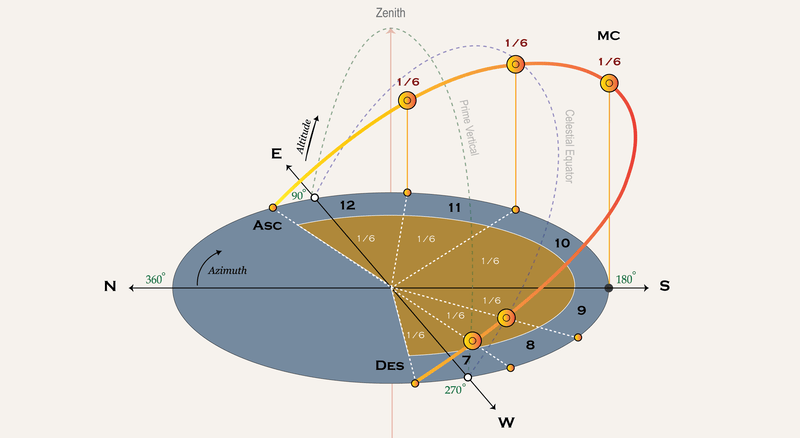
Lilly never strayed from the natural (Ptolemaic) mandate (see Christian Astrology, Book III, pp. 507-508, 519-521, 651-652), which provided the fundamental basis for celestial partitioning: following the diurnal movement, that is, distinguishing the stages of completion of every diurnal arc (cuspal degree) based upon the seasonal or oblique time of ascension of each one (determined by its own declination), which Lilly described as “Diurnal and Nocturnal Horary Times.” That is, their unique temporal or unequal hours (ht) or hour-markers.
- A “diurnal horary time” is the visible segment of a circle of declination.
- A circle of declination is the circle traced by the sun on a specific date (irrespective of whether a segment of it is not visible at some latitudes, be it the diurnal or the nocturnal segment).
- An hour-marker constitutes the precise arrival of a specific ecliptic coordinate (tropical zodiacal degree) to a certain azimuth and altitude of the observer, the Asc and the MC being the two most commonly mentioned or used.
However, the uninterrupted or simultaneous calculation of every visible arc of every circle of declination (diurnal arc or zodiacal degree) remained virtually impossible until the end of the 17th century.[6] As the primary directions expert Anthony Louis (2022) explains, Regiomontanus (Johannes Müller, 1436-1476) “was unable to operationalize” Ptolemy’s complex method and opted for a widely known close approximation using “circles of position,” a simplification that dates back to Campano of Novara (1220-1296) and his prime vertical, whose poles Regiomontanus himself borrows for the purpose of drawing the great circles that would pass through right ascension (RA) markers upon the celestial equator and therefrom onto the ecliptic.
In other words, it “was the best option available” (Louis, 2022) for the Ptolemaic calculation, a clear geometric simplification, but intrinsically “less accurate alternative” (Louis, 2022) than the natural method[7] (Tetrabiblos, III, 10, p. 286, ft. 3), which is why he preferred to adhere to the directions concerning the angular cusps only (whose calculation is dependent upon oblique ascension or diurnal motion alone; the phenomenon responsible for all arrival times).
3. An attempt to measure time with a ruler?
William Lilly’s professional practice confirms that the equatorial approximation was unstable or unreliable. Lilly explicitly noted that primary directions calculated based upon the equatorial method (deviation from oblique ascension/unequal hours) for planets and points intermediate between the horizon and the meridian could not be used reliably in the rectification of celestial charts, as Louis (2022, Primary Directions: Placidus vs Regiomontanus)[8] also correctly observed.
Lilly warned the reader that the tables were reliable only with respect to the angular cusps (pp. 507-508, 519-521). As we know, the time of arrival of the sun at the horizon or the local meridian (transit) is easily distinguishable: the surface of the horizon and the local meridian act or serve as the physical visual points of reference, exonerating us from the necessity of following diurnal motion or recording ascensional times more “laboriously” (Lilly, p. 651).
Discerning the rest of the cusps without breaking, bearing off, or deviating from topocentric or ascensional times (obliquity) was overwhelmingly trigonometrically difficult before Placidus of Titis (there are no visible reference points between the horizon and the meridian). A reliable procedure would allow us to detect or discern the times of arrival of these points at the rest of the regions of the horizon, the intermediate regions and their corresponding azimuths and altitudes. This phenomenon—the times of arrival according to diurnal motion and their corresponding topocentric coordinates—is governed exclusively by the declination (season) and latitude (city) of the observer, as the rigorous astronomical engine of Stellarium will confirm when cross-referenced with Placidian tables from, say, Solar Fire Gold (SFG).
Whilst it is true that William exploited or leveraged the equatorial method (1647) with respect to the intermediate cusps during interpretive work, what other method more accurate than Campano’s was there available? The question must also be asked in the case of Morin de Villefranche (1583-1656), for Placidus published in 1650 and 1657.
Lilly recognised the mathematical bias inherent in this methodology (relatively minimal at low latitudes) and did not trust it for the most delicate astronomical task: rectification (original times of arrival), for its accuracy, like that of all linear methods (standardising ascensional times across the equator, among other Euclidean-based reference frames), is limited to angular cusps. He was, then, a master in the art of making do with a necessary, yet unsuitable, instrument, albeit more accurate than that of Campano de Novara, for, as opposed to the prime vertical, the celestial equator never bears an inclination greater than 23.5º relative to the plane of the ecliptic.
4. The Physical and Logical Imperative
Lilly’s constraint or geometric handcuffs—the lack of accessible, accurate tables for proportional times (i.e., based upon the actual length of the individual diurnal/nocturnal arc)—no longer exists. Modern computation allows for the perfect application of the original Ptolemaic mandate[9], which is fulfilled by the Placidus de Titis trigonometric version (inspired by the work of Giovanni Antonio Magini).
See Stellarium and Solar Fire Gold (SFG): The Empirical (Non-Biographical) Falsifiability of Celestial Partitioning Methods[10] (18 May 2026) and the implications for the astrological practice therein.
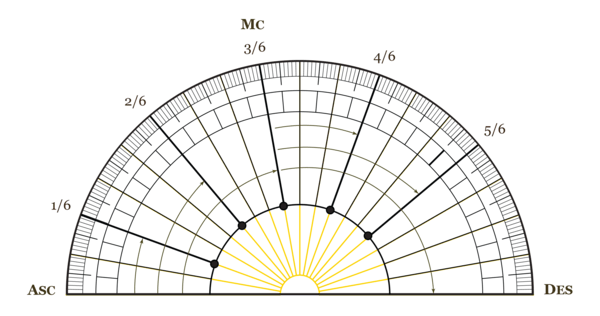
This form of calculation ensures that the segments of the celestial equator do correspond to the actual duration or required amount of time for every specific coordinate of the ecliptic (i.e., cuspal degree) to reach the same position on the local horizon (to become a certain cusp), as opposed to employing the linearly simplified or uniform 30º or 2-hour RA segments. For 30 degrees (or 2 hours of right ascension) is not linearly proportional to the amount of time required for a certain point of the ecliptic to complete one-sixth (1/6) of its diurnal arc at oblique horizons (much less 30º of altitude upon the prime vertical), the equivalent to one-third (1/3) of its diurnal semiarc, which would result in using the wrong cusp, that is, in an incorrect cuspal ascertainment.
Put simply, if the ecliptic coordinate 25º Gemini culminates 8 clock hours after rising, the temporal size of its semiarc is 120º of Right Ascension (RA), not 90º. Consequently, one-third (1/3) of this specific semiarc is not 30º RA (2 clock hours), but 40º RA (2 hours and 40 minutes). This coordinate will reach its required topocentric position (Alt-Az) exactly 2 hours and 40 minutes after rising. In the language of celestial kinematics, 160 clock minutes equates exactly to two unequal or temporal hours (2 ht) for any coordinate whose total semiarc is 8 clock hours long, due to the parameters of local latitude and declination.
The Mathematical Identity of every Asc and MC
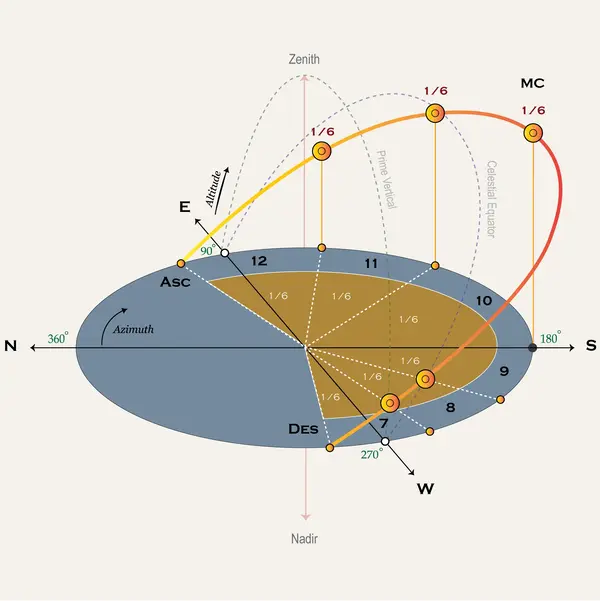
It must be noted that every Ascendant and Midheaven invariably represent the completion of six-sixths (6/6) and three-sixths (3/6) of their own respective nocturnal and diurnal arcs; or 3/3 and 3/3 of their own respective nocturnal and diurnal semiarcs. This fraction represents the exact duration the Sun would invest in fulfilling those specific rotational journeys if it occupied those exact zodiacal degrees at that specific horizon. If we consistently apply this organic, natural calculation to the remaining sectors of the local space, the ninth house cusp, for example, must mathematically constitute the fourth sixth (4/6) of its own diurnal arc. See the animation below.
Animated diagram of changing diurnal arcs and cusps. (1.8MB. Music by Vivaldi: The Four Seasons (Winter) 1. Allegro Non Molto)
The above determines whether we have correctly ascertained the cuspal degree of interest, be it of that of the first or of the twelfth house, the eleventh or the eighth. That is, only proportional values yield accurate results because every diurnal arc (cuspal degree) constitutes a function of its own specific declination (linked to a specific date). Times of arrival are intrinsically dependent upon the declination of the cuspal degree in question. (Correct arrival times are non-negotiable with regard to primary directions.)
This may become difficult to visualise without a three-dimensional illustration of the animation appearing above. However, the following 56-second simulation appearing below (double-click) does get much closer to a live 3D explanation.
Diagram simulating the changing diurnal arcs and cusps. (525KB. Music by Morunas: Autumn Days)
As spherical geometry is applied exhaustively, the linear methodologies of celestial partitioning, which attempted to decipher the Ptolemaic method, fail the test of astronomical fidelity, confirming thereby a cumulative temporal discrepancy (relative to the cusp of a house, that is, to the time of arrival of a certain degree to a certain altitude-azimuth) that reveals the geometric or physical instability of foreign frames of reference (e.g. celestial equator, prime vertical, Polich’s linear trisection of the tangent function) at oblique horizons (inasmuch as ascensional times are deliberately uniformed in different manners[11] immediately after the ASC and the MC are ascertained).
The proof of this pudding, that is, the full quantitative analysis, including the temporal discrepancies in times of arrival (i.e., amount of time required for a celestial object, be it a planetary body or the specific ecliptic coordinate wherein it sits, to reach or become a certain cusp) in linear methods (including Alcabitius and Koch) is publicly available at the philosophical research repository PhilArchive[12], and its accompanying appendices (computational evidence) may be found at the scientific data repository Zenodo[13]. The open-source Stellarium-Solar Fire Gold (SFG) ‘forensic’ analysis or auditing protocol, in turn, is available here[14].
5. The Necessary Conclusion
Logarithmically measured (high-precision) diurnal arcs (cuspal degrees) have been available to astrological practitioners since the early 18th century. Lilly was a master, but his use of the equatorial method (Regiomontanus) was not an endorsement of its geometric or physical superiority. By his own words, it constituted a compromise due to his inability or personal reluctance to reproduce the otherwise necessary and “laborious” calculations.
As English scholar Michael Edwards once noted, it is time we put our house in order, and our houses. To say it plainly, it is time we abandoned our tendency to rely solely upon astrological authorities of the past and focus our attention instead upon computational facts and their epistemological consequences. In the same way that a medical diagnosis cannot survive the absence of a physical body, the astrological symbol cannot survive the death of the physical phenomenon it purports to represent. Just as biology is governed by anatomy rather than the physician, topocentric coordinates are dictated by terrestrial rotation (diurnal motion) and axial tilt (declination), not by the astrologer. Consider the logical extension of this analogy: physicians may employ various therapeutic approaches, but they cannot retrospectively reorganise a patient’s internal organs to explain a pathology they otherwise failed to diagnose. Any valid clinical diagnosis must be grounded in the objective reality of the anatomical structure. Consequently, attempting to alter the anatomy (celestial positions) to justify or explain a human pathology (biographical event) constitutes not just an epistemological error but also a structural violation of the discipline.
Astrological interpretation is not an independent artistic exercise suspended in a vacuum; it is strictly derivative. It constitutes the hermeneutic translation of a physical reality. The most prominent astrologers in history were astronomers first, astrologers second; for them, the symbol was inextricably bound to celestial mechanics. The contemporary inclination to sever this indissoluble bond, far from honouring tradition, constitutes an absolute abandonment of it.
It is inadmissible to define astrology as the study of celestial correlations whilst simultaneously excusing a failure to measure the heavens accurately. The professional is to deploy the correct spherical trigonometry in order to faithfully reflect the topocentric celestial kinematics; only then—never before—should the interpretive process commence. The interpretation of the symbol requires its physical location.
David Bustamante Segovia
He is an independent researcher, legal linguist, and technical illustrator dedicated to the forensic analysis of celestial mechanics and traditiional astrology. His research focuses upon the procedural principles of celestial inference—tracing the rigour established by medieval Arabic scholars through to the 17th-century mathematician Morin de Villefranche. He is recognised for advocating a return to epistemological and geometrical accountability in modern house theory. He has served as an interpreter for the United States Embassy and the United States Navy Mission in Colombia, and is the official Spanish translator of Chris Brennan’s renowned work, Hellenistic Astrology: The Study of Fate and Fortune (2017). The exactitude required in military and legal translation is the same metric he applies to the mathematical architecture of topocentric astrological models. His research and articles have appeared in The Mountain Astrologer and Spica magazines.
References
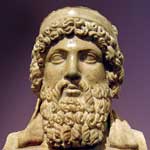
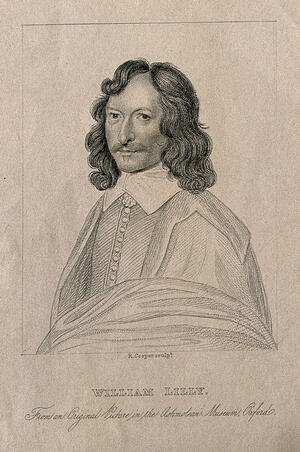
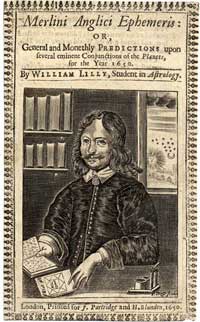
† Credit: William Lilly. Stipple engraving by Richard Cooper, the younger (1746-1814). "From an original picture in the Ashmolean Museum, Oxford." Wellcome Collection
[1] Stellarium and Solar Fire Gold - The Empirical (Non-Biographical) Falsifiability of Celestial Partitioning Methods, by David Bustamante Segovia.
[2] Latitudes wherein the sun and the ecliptic rise considerably north of due east and set north of due west during the summer, or south of due east and west during the winter.
[3] The prime vertical method (Campanus of Novara, 13th century) is a quintessential linear calculation of house cusps. Because cusps are inherently ecliptic points, they must be defined by the ecliptic’s own geometry; utilizing foreign frames of reference inevitably yields mathematically non-exact results. (For a quantitative comparison, see Bustamante, “Astronomical Fidelity,” PhilArchive, 2025). Similarly, the methods of Alcabitius and Koch constitute variations of linear partitioning that artificially uniform ascensional times. By assigning the specific ascensional time of the Ascendant (Alcabitius) or of the Midheaven (Koch) to the intermediate cusps, these imply that disparate points of the ecliptic share an identical time of rising/culmination. Outside of the unique conditions of the polar regions—where the ecliptic rises parallel to the horizon—such a sharing of ascensional times is physically and geometrically impossible.
[4] In the geometric derivations of Campanus (prime vertical) and Regiomontanus (celestial equator), great circles are projected from the North and South points of the local horizon in order to have them pass or intersect the designated great circle. These intersections are then projected onto the ecliptic to determine the cusps. This procedural exercise, however, results in cusps whose linear derivation are not linearly proportional to their actual times of ascension (amount of time required for them to attain said azimuth and altitude upon the horizon). By imposing a fixed spatial grid, these methodologies ignore the specific declination of each zodiacal degree (i.e. ecliptic coordinate), effectively decoupling the ‘houses’ from the real-time, kinematic, or non-linear motion of the local horizon (i.e., frozen grids rather than living arcs).
[5] In the 1640s, “obscure” was synonymous with “dark” or “hidden from understanding.” This strengthens the author’s observations. That is, it explains the reason for which Lilly (and his contemporaries) would have rushed toward the “rational” ease of, say, Argoli’s tables. In the 17th century, “rational” would have meant conforming to a clear uniform, universal mathematical ratio. Regiomontanus provided a clean, equal division of the equator (i.e., the procedural step through which all ascensional times—after the calculation of the Asc and before the calculation of the MC—become arbitrarily or artificially uniformed). This “rationality” constitutes a mathematical abstraction (arbitrary symmetry) that ignores the “irrational” (uneven or non-linear) reality of how the ecliptic (i.e., the plane upon which cusps lie) actually intersects the local horizon and displaces throughout it thereafter. Lilly would have exploited Argoli because the tables existed and they worked for a standardised Europe, as opposed to because they were more astronomically “true” than Ptolemy’s semi-arcs, as Lilly himself noted.
[6] Placidus de Titis published his work in Italy in Latin in 1650, and it was not translated into English until 1789 (Sibly) and 1814 (Cooper).
[7] The Isophasal Curve of Placidus (Ptolemy): Objective Refutation of Polich’s Assertion, by David Bustamante Segovia.
[8] Primary Directions: Placidus vs Regiomontanus, by Anthony Louis.
[9] For the computational transition, see The Michelsen Book of Tables (2009, pp. 30-31) and The AFA Tables of Houses: Placidus System (2014, p. vii), specifically regarding “proportional logarithms.” Logarithms were made available in 1614 by Napier. Before this development, the methods of Regiomontanus and Campanus prevailed due to their relative ease of calculation, as true spatiotemporal systems required either laborious trigonometry or custom-made planispheric astrolabes for specific latitudes. (See Robert Powell, History of the Houses, 1996, p. 18). This historical reliance upon spatial grids is further elucidated in Shlomo Sela’s 2014 translation (Vol. 4) of Abraham ibn Ezra, which contrasts (p. 404) the ‘planar division’ with the Ptolemaic ‘method of rising/proportional times.’
[10] Stellarium and Solar Fire Gold - The Empirical (Non-Biographical) Falsifiability of Celestial Partitioning Methods, by David Bustamante Segovia.
[11] Because ascensional rates fluctuate non-linearly based upon both the specific declination of a degree and the observer’s latitude, treating these times as uniform is a geometric impossibility. A method that ignores these individual ‘equinoctial periods’ (Ptolemy, Tetrabiblos, III, p. 289) replaces astronomical fidelity with a simplified mathematical artifice. For instance, while Cancer (summer) may require upwards of three hours to traverse the horizon in high latitudes such as Kodiak, Alaska, Capricorn (winter) may require as little as ninety minutes. Consequently, each segment invests a distinct temporal duration in attaining subsequent cuspal (topocentric) positions (for every daylight time of every degree―every diurnal arc of a varying length―is partitioned into six equal segments). To uniform or linearise these times is to assume a constant rate of ascension that does not exist in nature, thereby demonstrably falsifying primary motion.
[12] Astronomical Fidelity in Historical Coordinate Systems of Celestial Partitioning: Quantitative Comparison of Linear vs. non-Linear Measurements, by David Bustamante Segovia on PhilPapers.
[13] Supplemental Material for "Astronomical Fidelity in Historical Coordinate Systems of Celestial Partitioning: Quantitative Comparison of Linear vs. non-Linear Measurements", by David Bustamante Segovia.
[14] Stellarium and Solar Fire Gold - The Empirical (Non-Biographical) Falsifiability of Celestial Partitioning Methods, by David Bustamante Segovia.